
"Microdosing" gets used as if it were a recipe. It isn't. It describes a general approach to using small amounts of a botanical and paying attention to what happens, and it looks different depending on the plant, the product, and the person. Amanita muscaria extract has made this approach easier to try. It has also made it easier to misunderstand, because an extract behaves differently from the dried mushroom that most of the older lore is about.
This post walks through what the words mean ("extract," "muscimol," "microdose," "standardized") so that the label on your specific Amanita muscaria extract makes sense before you buy it. It's written for adults 21 and over who are curious and would rather understand something first.
First, what Amanita muscaria is (and isn't)
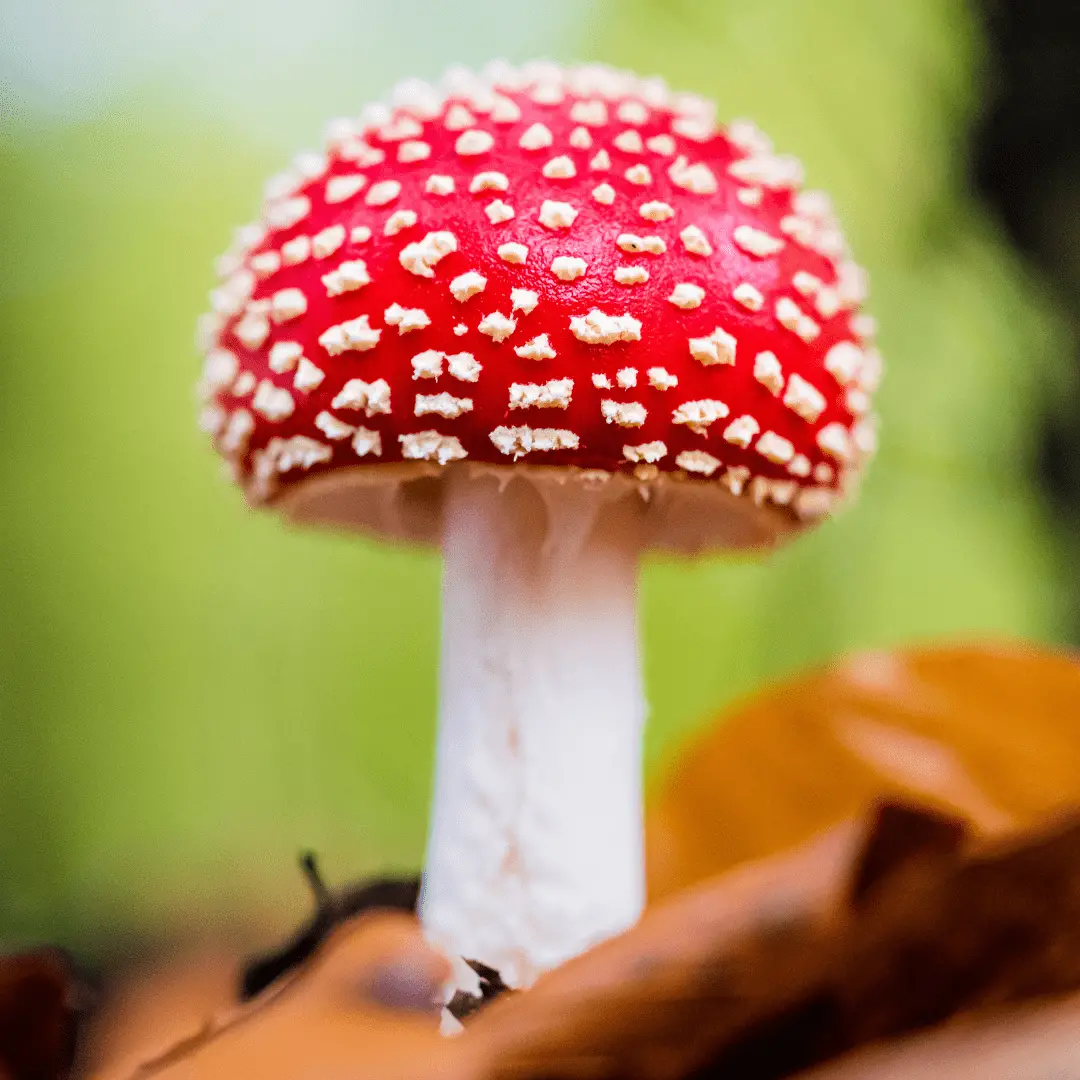
Amanita muscaria is the red-capped, white-spotted mushroom from children's books. That familiarity is part of why interest has grown. It's also why a lot of people arrive with the wrong assumptions.
It isn't a functional mushroom in the way that term is usually used. Functional mushrooms (lion's mane, reishi, cordyceps, and others) are generally sold for everyday use and are not known for noticeable psychoactive effects. Amanita muscaria sits in its own category, and what you've read about mushroom blends or supplements doesn't carry over to it. Our Mushroom 101 guide sorts out these distinctions if you want the fuller picture.
A careful note on traditional use
Amanita muscaria has a documented history of use among some Indigenous peoples of Siberia, particularly in the Kamchatka region, including Koryak communities, where it was used in ceremonial and social settings. That history is real and worth respecting on its own terms. Much of the rest of what circulates online is far less certain than it sounds: Viking berserkers, the origins of Santa Claus, ancient Vedic rituals. Some of it is modern speculation dressed up as history. Treat those stories as folklore until better evidence turns up.
One more point that matters for everything below: traditional preparation was almost always of the whole dried mushroom, not a standardized extract. The two are not the same thing.
What "extract" means on an Amanita muscaria label
An Amanita muscaria extract is a concentrated preparation made from the mushroom, usually by processing dried caps in water or alcohol with heat, then reducing the result. The point is to pull the compounds of interest into a more consistent form than you'd get from a dried cap, which can vary enormously from one mushroom to the next.
Ibotenic acid, muscimol, and why heat matters
Two compounds are the main reason Amanita muscaria is discussed at all: ibotenic acid and muscimol. Ibotenic acid is present in the fresh and dried mushroom. When the mushroom is heated, whether in drying, cooking, or extraction, some of the ibotenic acid converts into muscimol through a process called decarboxylation. We cover each compound on its own in What is muscimol? and What is ibotenic acid?, and the conversion step in How to decarboxylate Amanita muscaria.
This matters because many of the unwanted effects people report, especially nausea, are often associated with ibotenic acid. A well-made Amanita muscaria extract is processed to convert as much ibotenic acid as possible into muscimol, and reputable products are standardized to a stated muscimol amount per serving. That number is the most useful thing on the label.
How a given serving of muscimol is experienced is a separate question, one the research hasn't answered in any precise way, and one that varies from person to person. More on that further down.
Why two extracts can be very different
Here's where people get tripped up. Two bottles both labeled "Amanita muscaria extract" can differ in concentration by a wide margin. One brand's dropper might contain a small fraction of what another's does. Extraction method, how thoroughly the ibotenic acid was converted, and whether the product is standardized at all will all change what's inside.
This is why "lab tested" should mean something specific. A third-party lab result should show muscimol content, ibotenic acid content, and screening for contaminants. If an Amanita muscaria extract doesn't come with that, you're guessing. You can review third-party lab results for products in our Amanita muscaria collection, and How to read third-party lab results explains what the numbers on a certificate of analysis mean.
What to look for on the label
Before anything else, find three things: muscimol content per serving, the serving size the maker recommends, and a batch number or link for lab results. If the label only lists grams of mushroom with no muscimol figure, it's telling you very little about potency.
For a closer walk-through of reading these labels, see our guide to microdosing with Amanita muscaria extract.
What "microdosing" means as a general approach
Strip away the hype and microdosing is a simple idea: use a small amount, spaced out over time, and pay attention. People apply this approach to a range of botanicals, kanna and mushroom blends among them. The specifics change with the plant. The habit of attention is the constant.
Small amounts, with attention
The word "small" is doing real work here. The intent is to stay well below the amounts people use for a full experience and simply notice what, if anything, happens. Many people notice very little on a given day, and responses vary widely from one person to the next. Many people who take this approach keep simple notes (what they took, when, and what they observed over the following hours) so that after a few weeks they're working from their own observations rather than someone else's.
Why there's no dose chart here
Older articles about microdosing Amanita muscaria often give a gram range for dried mushroom. That range doesn't translate to an extract. A gram of dried cap from one mushroom can have a very different muscimol content than a gram from another, and neither tells you anything about a standardized Amanita muscaria extract.
With an extract, the serving size on your specific product is the only guide that reflects what's actually in the bottle. A general chart would be a guess about a product you haven't chosen yet. Many people start below the labeled serving to see how they respond before working toward it. There's no rush.
Spacing and patience
Amanita muscaria is not something most people take every day. Many people space servings out, leaving a day or more between them, and give themselves time to notice how they respond before taking more. Follow the frequency guidance on your product's label rather than a number from a forum. When in doubt, slower is the safer direction.
Comparing formats: dried caps, extracts, capsules, gummies, tea
Format changes the experience more than most people expect. A kava tea and a kava extract are very different things, and the same holds for Amanita muscaria.
Dried mushroom
Dried caps are the least predictable format. Potency varies by mushroom, by where it grew, and by how it was dried. Raw or poorly prepared mushroom still contains a high proportion of ibotenic acid, which is where many reports of nausea and confusion come from. Foraging your own adds a separate risk: Amanita muscaria has lookalikes, and some of them are seriously toxic. For most people exploring the approach described in this post, dried caps are not the place to start. If you're set on them anyway, our dried mushrooms come with lab results, and our beginner's guide to decarboxylation explains the preparation step.
Extracts and tinctures
A standardized Amanita muscaria extract, usually sold as a tincture, is more consistent than dried mushroom and lets you adjust servings in small increments. Consistency still depends on the brand, which is why lab results matter. Tinctures suit people who want fine control over how much they take.
Capsules
Capsules hold a pre-measured amount of Amanita muscaria extract or dried material. People who want to skip the measuring, or who'd rather not taste anything, often lean this way. The trade-off is that you can't easily go below one capsule's worth. If pre-measured consistency appeals to you, you can browse our Amanita muscaria capsules and powders and check the muscimol content per capsule before deciding.
Gummies and teas
Gummies are edibles, and edibles tend to take longer to come on. They can be experienced differently from a tincture even at a similar labeled amount because of how they're absorbed. Teas made from dried mushroom carry the same variability as the mushroom itself. Neither is wrong. It's just worth knowing that a labeled milligram figure doesn't guarantee an identical experience across formats, or across people.
What research has and hasn't settled
This is the section where it's easiest to overstate things, so here is what's actually established.
What's known
The chemistry is well documented. We know which compounds Amanita muscaria contains, and we know that heat converts ibotenic acid to muscimol. We know that larger amounts are associated with nausea, drowsiness, confusion, and in some cases more serious reactions.
What we don't have is controlled human research on microdosing Amanita muscaria extract. There are very few clinical studies on small, repeated servings in people, and none that would let anyone say with confidence what a microdose does or doesn't do.
What's self-reported
Most of what circulates comes from people describing their own experiences in forums and online communities. These accounts are varied and often contradictory. Plenty of people report noticing very little. Self-reported accounts aren't clinical evidence. They can't separate the mushroom from expectation, timing, or the dozens of other things happening in someone's week, and they can't predict how any particular person will respond.
What this means for you
Treat your own experience as the data that matters. Start gently, go slowly, and write things down. If something feels off, stop. Those few habits are the whole method.
Before you start: honest safety notes
A few things worth knowing plainly:
- The most commonly reported unwanted effects are nausea, drowsiness, and confusion. They show up more often with larger amounts and with poorly prepared mushroom.
- If you've taken more than you intended, effects vary from person to person and pass with time. Anyone who is worried should contact a medical professional or Poison Control.
- Don't combine Amanita muscaria with alcohol, sedatives, or other substances that act on the nervous system. Don't drive or operate anything that needs your full attention after taking it.
- If you're pregnant, nursing, taking any medication, or managing a health condition, talk with a qualified healthcare professional before using any Amanita muscaria extract.
- Keep every format, gummies especially, in locked storage, out of reach of children and pets.
- Laws around botanical and plant-based products vary by state and locality. Louisiana, for example, restricts Amanita muscaria for consumption, and rules elsewhere can change. You're responsible for knowing the laws where you live. Is Amanita muscaria legal? covers the state and federal picture in more detail.
- Purely Found products are for adults 21 and over.
Nothing in this post is medical advice. These statements have not been evaluated by the FDA, and Amanita muscaria extract products are not intended to diagnose, treat, cure, or prevent any disease.
Where to go from here
If you want to get comfortable reading labels before buying anything, our guide to microdosing with Amanita muscaria extract goes deeper on muscimol figures, serving sizes, and what lab results should show. If pre-measured servings sound like a better fit, our Amanita muscaria capsules and powders list muscimol content per capsule. If you're brand new to the mushroom altogether, Amanita muscaria: A Clear, Grounded Beginner's Guide starts from the beginning. And if you're still sorting out how Amanita muscaria differs from functional mushrooms and mushroom blends, Mushroom 101 is the place to start.
No rush. The mushroom has been around a lot longer than the trend.
Frequently asked questions
What is Amanita muscaria extract?
An Amanita muscaria extract is a concentrated preparation made from the mushroom, usually with water or alcohol and heat. Heating helps convert ibotenic acid into muscimol, the compound most products are standardized to. Because extraction methods and concentrations differ between brands, two extracts can be quite different. The label, especially muscimol content per serving and third-party lab results, tells you what you're actually getting.
How much Amanita muscaria extract is a microdose?
There isn't a single number. "Microdosing" describes a general approach, not a fixed quantity: small amounts, spaced out, with attention to how you respond. Because Amanita muscaria extract strength varies by product, the serving size on your specific label is the only reliable guide. Many people start below the labeled serving to see how they respond.
Are Amanita muscaria capsules different from extract tinctures?
Capsules are typically a pre-measured amount of Amanita muscaria extract or dried material, which some people prefer for consistency. Tinctures can be adjusted more finely. Gummies and teas may be experienced differently again, even at similar labeled amounts, because of how they're absorbed. The format matters less than reading the label carefully and starting gently.
Is Amanita muscaria legal?
Laws around botanical and plant-based products vary by state and locality, and at least one state, Louisiana, restricts Amanita muscaria for consumption. Rules can change. You're responsible for knowing the laws where you live before purchasing. All Purely Found products are for adults 21+.
Explore Amanita muscaria at your own pace Clear labels, third-party lab results, and honest guidance before you buy. Adults 21+.
Free Shipping on Orders $50+