
Blue Lotus Tinctures
Showing the single result
-
Dreamer Shrooms Blue Lotus Extract Tincture
Original price was: $17.95.$15.95Current price is: $15.95.
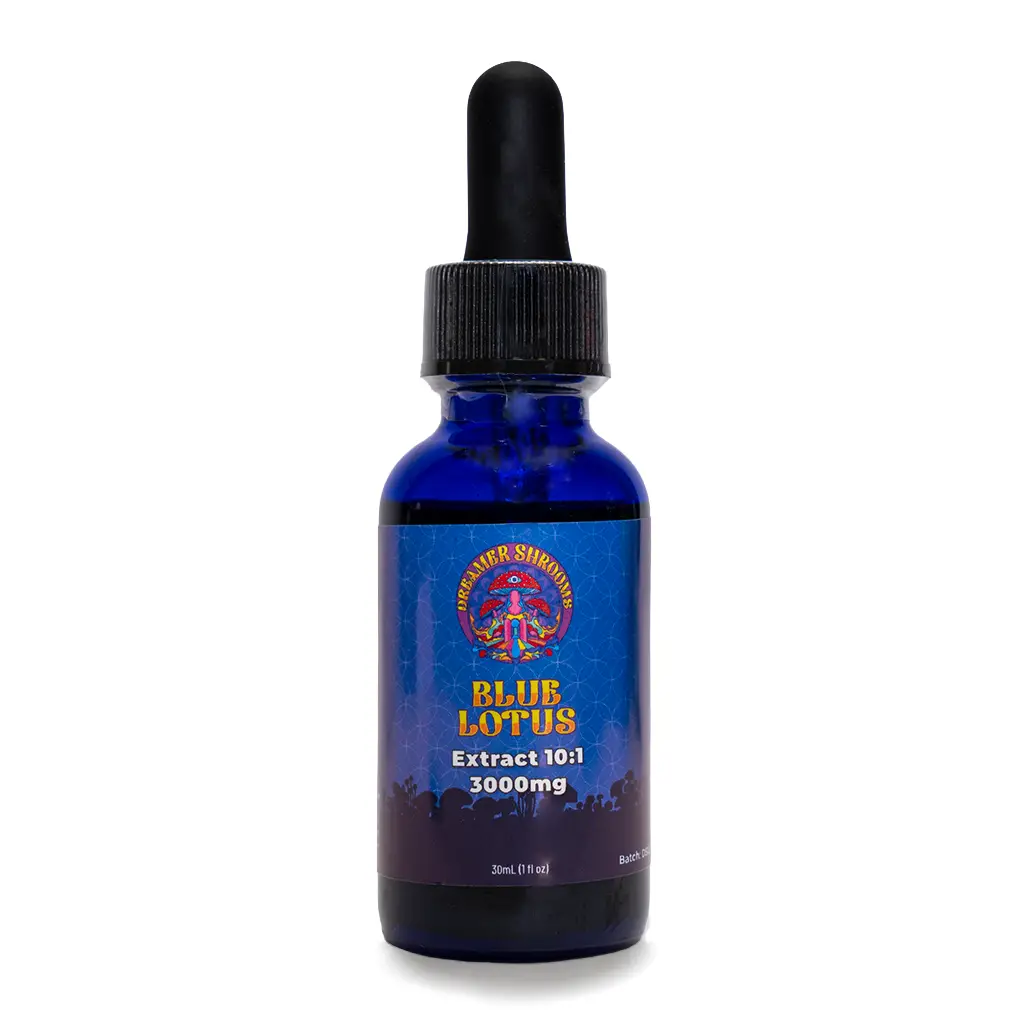
Blue Lotus Tinctures

Blue Lotus Tinctures are one of the simplest ways to explore this storied water lily. A few drops under the tongue, or stirred into tea, and that’s it. No preparation. Blue lotus (Nymphaea caerulea) has a long history in ancient Egypt, where it appears throughout art and ritual along the Nile, and it has traditionally been used in the region for relaxation and quiet reflection. A tincture concentrates the flower into a liquid extract, which makes it easy to measure, easy to carry, and a good format for starting gently.
If you’re new to blue lotus, a tincture is a reasonable place to begin. Because it’s a concentrated extract, a tincture is generally a different experience than a loose-flower tea: often more consistent from dose to dose, and quicker to take. That also means serving sizes matter. Start with less than you think you need. Many people report a calm, settled feeling, though experiences vary and the science here is still developing. Much of what we know comes from traditional use rather than modern clinical research, and we’d rather say that plainly than turn curiosity into certainty.
Every tincture in this collection comes with clear labels and transparent sourcing, so you know what’s in the bottle before you buy. Extract strength, carrier base (usually alcohol or glycerin), and serving guidance should all be listed. If a product doesn’t tell you these things, we don’t think it belongs on the shelf.
FAQs
What is a blue lotus tincture?
A tincture is a liquid extract made by steeping blue lotus flower in a solvent, typically alcohol or vegetable glycerin, to draw out the plant’s compounds. The result is a concentrated liquid you take by the dropper, either directly or mixed into a beverage.
How is a tincture different from blue lotus tea?
Mostly in strength and convenience. Tea made from loose petals tends to be gentler and slower, while a tincture is more concentrated and easier to dose consistently. Neither is better. They’re just different experiences, and it helps to know which one you’re reaching for.
How much should I take?
Follow the serving guidance on the specific product, since extract strengths vary from brand to brand. As a general approach, start gently with a smaller serving, give it time, and pay attention to how you feel before taking more.
Is blue lotus legal?
Laws around botanical products vary by state and locality, and they change. You’re responsible for knowing the rules where you live before ordering.
Who should avoid blue lotus tinctures?
If you’re pregnant, nursing, taking medication, or managing a health condition, talk with a qualified healthcare professional before use. These products are for adults 21+ only, and nothing here should be read as medical advice. Blue lotus is not intended to diagnose, treat, cure, or prevent any disease, and these statements have not been evaluated by the FDA.
Blue lotus rewards a curious, unhurried approach. Read the labels and know your sourcing, then see which extract fits how you like to explore. Shop the full collection and take your time with it.