
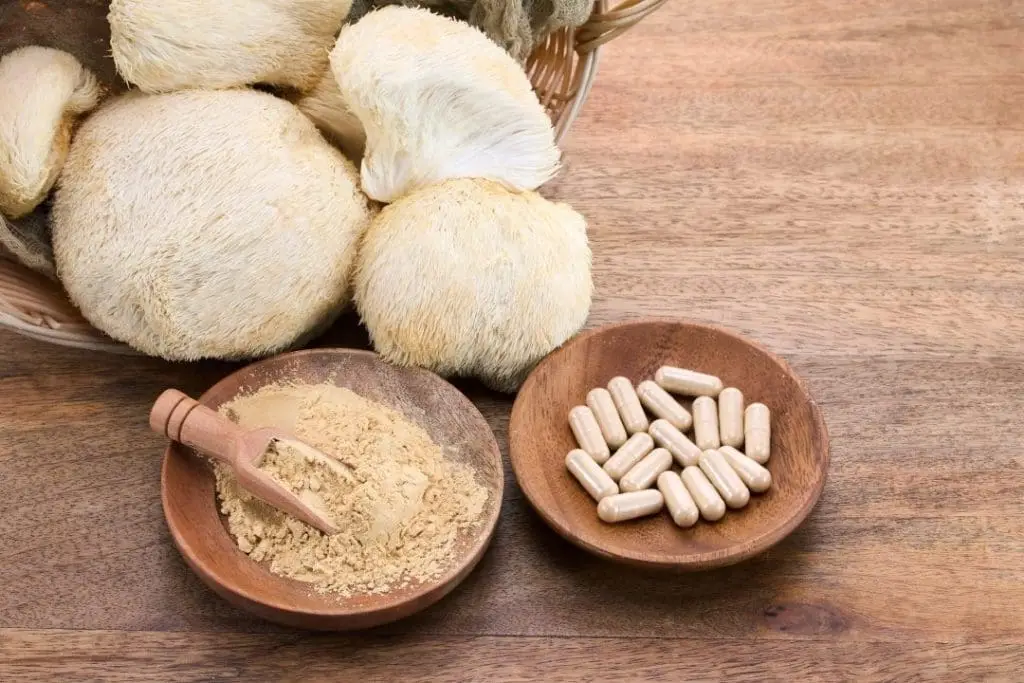
Mushroom supplements used to live in specialty shops. Now they show up in coffee blends, cocoa mixes, gummies, and chocolate bars. The global functional mushroom market was estimated at roughly $32 billion in 2024, and it is still growing. More choice is good. More confusing labels, less so. This guide covers what mushroom supplements actually are, the formats you'll run into most, which mushrooms people tend to pick, and how to read a label before you buy.
What mushroom supplements are
A mushroom supplement is a product made from a fungus, or a few fungi together, that people take as part of a daily routine. The mushrooms involved are the same ones that have been eaten or brewed as tea in different parts of the world for a very long time. They are a separate category from Amanita Muscaria, which is a distinct mushroom with its own history and its own set of considerations.
Two parts of the fungus end up in supplements, and the difference matters when you're reading a label.
Fruiting body. This is the part you'd recognize as a mushroom: the cap, the stem, the shelf growing off the side of a tree. It is the visible, above-ground structure.
Mycelium. This is the thread-like network that grows beneath the surface, anchoring the fungus and pulling in nutrients. In commercial production, mycelium is usually grown on grain. When that's the case, the finished powder includes the grain it grew on, and the label may say "mycelium on grain" or "myceliated grain."
Neither part is automatically better. They are different materials with different compositions, and a clear label will tell you which one you're getting.
Common formats
The same mushroom can come in several forms, and using them can feel quite different from one to the next.
Capsules are the simplest option. You get a measured serving with no flavor to deal with, which suits people who want a routine they don't have to think about.
Powders can be stirred into coffee, smoothies, or soup. You get some flexibility on serving size, and you taste the mushroom itself. Some people like that. Others don't.
Gummies have caught on with first-time buyers because they're familiar and easy to take. Mushroom gummies often pack several mushrooms into one piece, so check how much of each mushroom is in a serving rather than just the total.
Tinctures are liquid extracts taken by the dropper. They are usually more concentrated than a powder and tend to absorb quickly, which makes this a format where a small starting amount makes sense.
Chocolates blend mushroom extracts into a bar or square. Mushroom chocolates are an easy way in, though the mushroom content per piece varies a lot between brands.
Common mushrooms people choose
Most of these mushrooms have long histories in particular regions. Research on them is still early, and much of what's known comes from traditional use and from what people report rather than from settled science.
Reishi grows in shelf-like formations on hardwood trees, with a glossy reddish cap that fades to orange and white at the edges. It has a long history in traditional practices in China and Japan, where it was valued highly enough to be considered a prized find. Brewed, it is bitter, which is why most people take it as a capsule or extract instead. It often ends up in evening routines.
Lion's Mane is white and shaggy, with long fronds that hang like a mane. It grows on hardwoods in North America, Europe, and East Asia, and people in China and Japan have cooked and eaten it for generations. Many people reach for it in the morning or before a work session.
Turkey Tail forms thin, fan-shaped layers with concentric bands of brown, tan, and gray. It grows on fallen logs across much of the world and has traditionally been simmered as a tea in East Asia. For a lot of people it is simply part of a daily routine.
Chaga is a dense, dark growth found on birch trees across the Northern Hemisphere, with an orange interior under a charcoal-like exterior. It has traditionally been brewed as a tea in Siberia, Russia, and parts of Northern Europe. The flavor is often described as earthy with a mild vanilla note.
Cordyceps has a slender, orange-yellow stalk. The wild species has a long history on the Tibetan Plateau and in Nepal and China, but nearly all the cordyceps in supplements today is cultivated. People often take it before a workout or a long day on their feet.
Maitake grows in frilly, layered clusters at the base of oak and maple trees. In Japan it has been a prized culinary mushroom for centuries, and it is sometimes called the "dancing mushroom." It is also a common wild find in the northeastern United States. You'll see it in the kitchen about as often as in supplement form.
How to choose a mushroom supplement
The label is where most of your decisions get made. A few things to look for:
Which part of the mushroom is used. Look for "fruiting body," "mycelium," or both. If the label doesn't say, that's worth noting.
Extract or whole mushroom. Whole mushroom powder is just dried, ground mushroom. An extract has been processed, usually with hot water, alcohol, or both, to concentrate certain compounds. Extracts are often labeled with a ratio such as 8:1, meaning eight parts raw mushroom went into one part extract. Dual extracts use both water and alcohol. Because extracts are more concentrated, serving sizes are smaller.
Serving size and amount per serving. Check how many milligrams of each mushroom are in one serving, not just the total blend weight. For mushroom blends that combine several species, that breakdown tells you what you're actually getting.
Third-party testing. A reputable product comes with a certificate of analysis, or COA, from an independent lab. A good COA confirms the mushroom's identity, screens for heavy metals and microbial contaminants, and may list beta-glucan content, which is one way to gauge how much actual mushroom is in there. If a brand can't show you lab results, keep looking.
Start gently. Whatever format you choose, begin with a single serving and pay attention to how you feel over a week or two before adjusting anything. If you take medication or are pregnant or nursing, talk to a healthcare professional before adding any mushroom supplement to your routine.
Frequently asked questions
Not quite. "Functional mushrooms" refers to species like reishi, lion's mane, and turkey tail that people take as part of a routine rather than as a meal. "Mushroom blends" are products that combine several of those mushrooms in one capsule, gummy, or powder. A blend is one way to take functional mushrooms. A single-species product is another.
In the United States they are sold as dietary supplements, which the FDA does not review before they reach shelves. That is why third-party lab results matter so much when you're comparing brands.
Many people do, which is why blends exist. If you're new to mushroom supplements, though, trying one at a time for a while makes it easier to notice how each one sits with you.
Most capsules and powders keep for a year or more if stored somewhere cool and dry. Gummies and chocolates have shorter shelf lives, so check the date on the package.
Explore mushroom blends at Purely Found
Every product in our mushroom collection comes with third-party lab results and a label that says plainly what's inside. If you're ready to browse, start with our full range of mushroom blends, or go straight to mushroom gummies if you want an easy first format. Take your time, read the label, and start gently. Feel different. Live curious.