
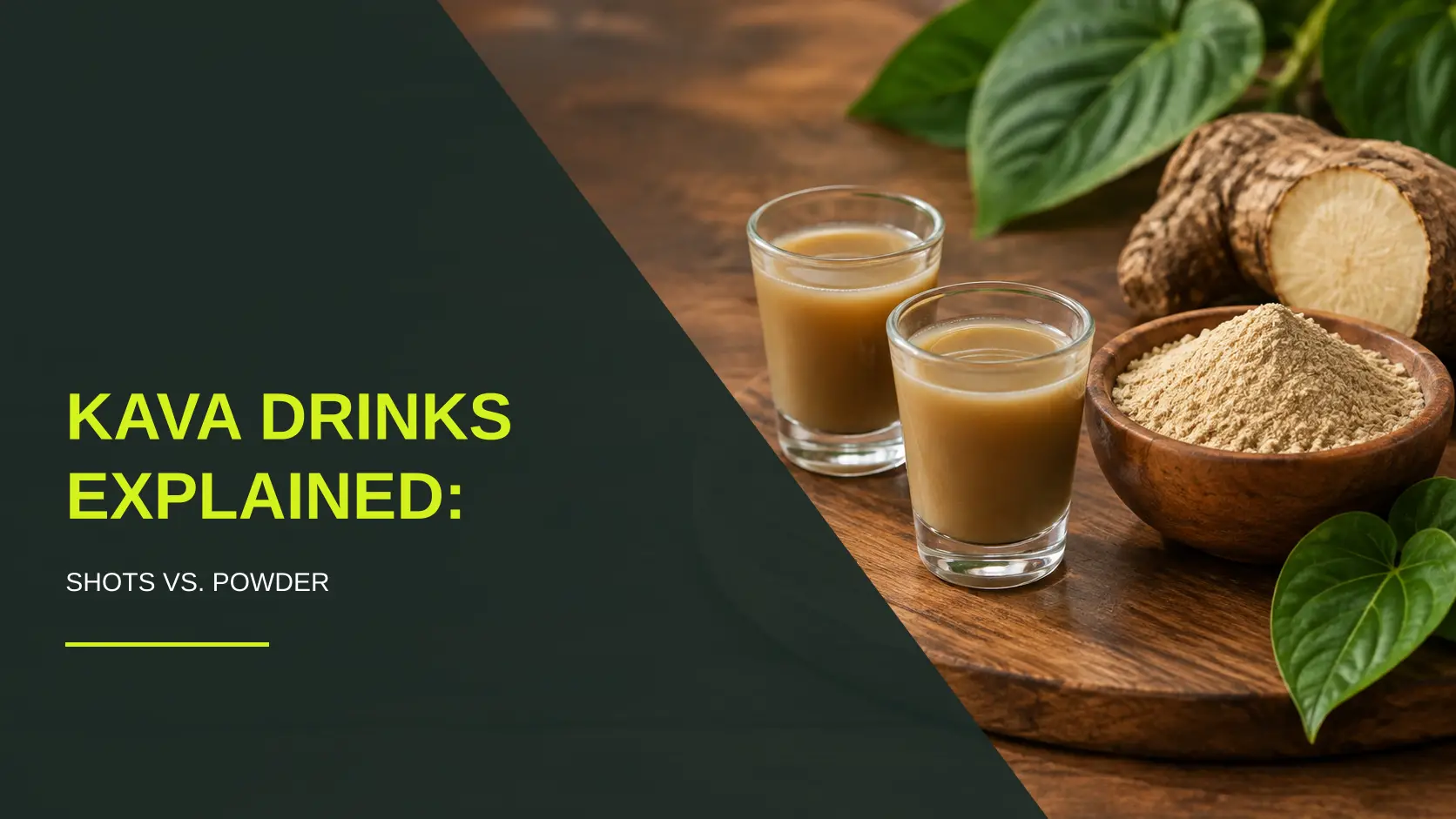
Kava has traveled a long way from the shared bowl. A root that has been prepared and passed around in the Pacific Islands for generations now shows up on shelves as powder, instant mixes, concentrates, canned seltzers, and small ready-to-drink shots. That's a lot of options for something most people in the U.S. are still just getting to know.
This guide walks through kava drinks from the ground up: what kava is, the main formats you'll run into, what's actually inside a shot or a can, how they compare to traditionally prepared powder, and how to read a label before you buy. If you're an adult 21+ and plant-curious, this is a good place to start. One thing to keep in mind throughout: the serving guidance on the product label is the guide. A forum post isn't, and neither is this article.
Table of contents
- What is kava? A grounded primer
- The main types of kava drinks
- What’s actually inside a kava shot
- Kava shots vs. traditional powder: the honest differences
- How to read a kava drink label
- When a ready-to-drink shot makes sense (and when it doesn’t)
- Safety notes before you try kava drinks
- Starting gently with your first kava shot
- A closer look: kava drinks at Purely Found
- Frequently asked questions about kava drinks
- The takeaway
What is kava? A grounded primer
Where kava comes from
Kava is made from the root of Piper methysticum, a plant in the pepper family cultivated across the Pacific Islands, most notably in Vanuatu, Fiji, Tonga, and Samoa. In Vanuatu, it's commonly prepared and shared in the evening at a nakamal, a gathering place where people drink from a communal bowl and talk as the light goes down. In Fiji, Tonga, and Samoa, kava (often called yaqona or 'ava) plays a role in both everyday social life and more formal occasions. The specifics vary from island to island. The common thread is that kava has traditionally been a social drink, prepared from the root and shared slowly.
What kavalactones are
The compounds in kava root that researchers focus on are called kavalactones. There are several of them, and the balance shifts depending on the cultivar and where it was grown. Labels on kava drinks often quantify kavalactone content per serving, which is why you'll see the term so often.
How kavalactones work in the body is still being studied. The National Center for Complementary and Integrative Health maintains an overview of kava that covers what the plant is, what research has looked at so far, and the safety questions that remain open. What people describe is more consistent than what the science has settled: many report a tingling or mild numbness on the tongue shortly after drinking. That's a common description, not a promise. Your own experience may be different.
The main types of kava drinks
Before getting into shots specifically, it helps to see the full range. Kava drinks generally fall into four buckets.
Traditional grind (powder)
Dried root, ground to a medium or coarse powder. You knead or steep it in cold water, usually inside a strainer bag, then squeeze and strain. This is the closest to how kava is prepared in the Pacific, and it takes a bit of time and effort. Purely Found carries Root of Happiness Premium Ground Kava Root from Vanuatu, Samoa, and Fiji in 8 oz bags; you can compare them in the Kava Powder category.
Micronized and instant kava
Micronized kava is root milled so finely that it can be stirred straight into water without straining. Instant kava is typically a dehydrated extract that dissolves the same way. Both skip the kneading step.
Concentrates and extracts
Liquid extracts standardized to a stated kavalactone amount. These are usually added to water or juice rather than taken on their own. If the word "extract" on a label leaves you with questions, our post on kava extract and what the kavalactone figures mean goes into more detail.
Ready-to-drink shots and canned kava
Pre-measured, flavored, sealed, and ready to open. Shots are small and concentrated. Canned kava beverages tend to be larger and contain far less kava per can. Both are built around convenience, and they're the focus of the rest of this guide.
| Format | Prep time | Taste profile | Serving consistency | Portability | Cost per serving | Often chosen for |
|---|---|---|---|---|---|---|
| Traditional grind | 10–20 min | Earthy, peppery, gritty | Varies by prep and batch | Low | Lower | Traditional experience, sharing |
| Micronized / instant | 1–2 min | Earthy, smoother | Moderate | Medium | Moderate | Quick prep without straining |
| Concentrate / extract | 1 min | Depends on what you mix it with | High | Medium | Moderate to higher | Adjustable strength |
| Canned kava beverage | None | Flavored, light, carbonated | High | High | Moderate | A low-kava, social option |
| Ready-to-drink shot | None | Usually flavored, smooth | High | High | Higher | Travel, consistency, experienced drinkers |
What's actually inside a kava shot
Turn a shot around and the ingredient panel is usually short. Here's what each line typically means.
Kava extract. This is the active ingredient. Some labels state it by extract weight per serving, others by kavalactone content, and some give both. "Extract" can mean different things from brand to brand. Some use a water-based extraction of noble root; others use different solvents or parts of the plant. A label that names the source and shows a kavalactone figure is telling you more than one that just says "kava."
Carrier liquid. Water, fruit juice, or a glycerin base. This affects taste, texture, and sometimes how the shot sits in your stomach. Glycerin-based shots tend to feel thicker and sweeter.
Flavorings and sweeteners. Kava on its own tastes earthy, peppery, and a little bitter. Most shots lean on natural flavors, fruit juice, sugar, or sugar alternatives to soften that. If you're watching sugar intake, this is a line worth reading.
Other botanicals. Some kava drinks add ginger, turmeric, blue lotus, or other herbs. There's nothing wrong with that, but you should know every ingredient going in, especially if you take medication or have sensitivities. A can that combines kava and blue lotus is a two-botanical product, and it's worth reading up on both.
What you'd rather not see. A "proprietary blend" with no kavalactone figure and no named source. That doesn't mean the product is bad, but it does mean you're buying without much information. Products with transparent sourcing and third-party lab results give you a lot more to go on.
Kava shots vs. traditional powder: the honest differences
Neither format is better. They're different experiences, and most people who try both end up with a preference based on what they want from a given evening.
Preparation and time
Powder asks for 10 to 20 minutes of kneading or steeping, plus cleanup. A shot is open-and-drink. If prep is part of the appeal for you, powder wins. If you've got ten minutes before dinner and no strainer bag, the shot does.
Taste and texture
Traditionally prepared kava is earthy and gritty, and plenty of people find the first few sips a bit of a hurdle. Shots are almost always flavored and smooth. Some long-time kava drinkers miss the traditional taste; others are relieved to skip it.
Concentration and consistency
A shot is pre-measured, and usually far more concentrated per ounce than a bowl of powder. Powder potency depends on the batch, the cultivar, and how thoroughly you knead it, so two bowls on two nights can land differently. This matters most for newcomers. An "extra strength" shot is a very different starting point than a traditionally prepared bowl or a light canned seltzer, which is one reason to read the label and start gently.
How people describe the experience
Many people report that traditionally prepared kava is something they settle into gradually over an hour of sipping and talking, while concentrated shots are often described as quicker to notice. These are anecdotal patterns, and effects vary from person to person. Research comparing formats head-to-head is limited, so treat the descriptions as a starting point rather than a rule.
Cost and convenience
Per serving, shots generally cost more. What you're paying for is the consistency and the fact that it's ready when you are. If you plan to drink kava regularly, powder is usually the more economical choice over time.
How to read a kava drink label
This is the most useful skill you can pick up before buying kava drinks. It takes about a minute per product once you know what to look for.
Kavalactone content per serving
This number is the clearest signal of strength. Higher isn't automatically better. It's just stronger, which means you'll want to be more deliberate about how you start. If the label gives a total kavalactone amount rather than a per-serving one, do the quick math against the stated serving size. If the label only gives extract weight, check the product page or the lab results for a kavalactone figure.
Noble kava vs. non-noble
"Noble" refers to the cultivars traditionally favored in the Pacific for regular drinking. Non-noble varieties, sometimes called tudei ("two-day") kava, are generally not used for everyday drinking in Pacific communities, and both Vanuatu's kava legislation and the Codex Alimentarius regional standard for kava beverages focus on noble cultivars. A reputable seller will label noble kava clearly and can show testing to back it up.
Origin and cultivar
Look for the country: Vanuatu, Fiji, Tonga, Samoa, or occasionally Hawaii or Papua New Guinea. Some labels go further and name a specific cultivar. Origin transparency doesn't by itself tell you about quality, but a brand willing to tell you where the root came from is usually willing to tell you other things too.
Serving size and servings per container
Here's where you get your actual guidance. A shot might be one serving or three. A can might be a single serving. Some labels note that a product is intended for experienced consumers. Whatever it says, that's your reference point. If a forum thread disagrees with the label, go with the label.
Third-party lab results
A certificate of analysis typically shows kavalactone content and screens for contaminants like heavy metals and microbes. Look for a lot number, batch date, or QR code on the bottle that links to results. Purely Found posts third-party lab results for the products it carries, and if you've never read a COA before, our guide on how to read third-party lab results walks through it line by line. If a brand says "lab tested" but you can't find the results anywhere, it's fair to ask for them.
Other ingredients and allergens
Scan for sweeteners, juice, added botanicals, and anything you personally react to. This takes five seconds and saves you trouble later.
Best-by date and storage
Liquid kava has a shelf life. Check the date, note whether the label asks for refrigeration after opening, and keep every kava product in locked storage, out of reach of children and pets.
When a ready-to-drink shot makes sense (and when it doesn't)
A shot tends to make sense when you already know how kava sits with you, you're traveling, you want something after work without the prep, or you simply want a consistent, known serving every time.
A canned kava beverage may suit you better when you're newer to kava, you want something light to sip over a conversation, or you'd rather start at the low end before deciding whether to explore further.
Powder may suit you better when you want the traditional experience, you're sharing with friends, you prefer adjustable strength, or you're thinking about cost over months rather than nights.
There's no wrong answer. Feel different, live curious: the point is to explore in a way that fits your life rather than to arrive at a particular outcome.
Safety notes before you try kava drinks
None of this is meant to alarm. It's the practical stuff a friend who'd read a bit would mention before you opened the bottle.
Alcohol. Many sources advise against combining kava with alcohol. Keep them on separate evenings.
Medications and health conditions. If you take any medication, are managing a health condition, or are pregnant or nursing, talk with a qualified healthcare professional before trying kava drinks.
Liver research. Kava has been the subject of liver-related safety research and regulatory review over the past two decades. The findings are mixed. The World Health Organization published an assessment of the risk of liver toxicity with kava products that points to product quality, the plant parts used, and extraction methods as part of the picture. Research is still developing. In the meantime, choosing noble kava with transparent sourcing and third-party lab results, and avoiding heavy or frequent use, is a sensible approach.
Driving and alertness. Don't drive or operate machinery after drinking kava. Drowsiness is a commonly noted side effect.
If you've taken more than intended. Effects vary from person to person. Anyone who feels unwell or worried should contact a medical professional or Poison Control.
Legal status. Laws around botanical and plant-based products vary by state and locality. You're responsible for knowing the rules where you live before ordering.
Age. Kava drinks are for adults 21+ only. Keep them in locked storage, out of reach of children and pets.
Statements in this guide have not been evaluated by the FDA, and kava drinks are not intended to diagnose, treat, cure, or prevent any disease. The full details are in the Purely Found terms and conditions.
Starting gently with your first kava shot
- Read the whole label first. Kavalactone content, serving size, servings per container, ingredients, and the lab-results link if there is one. If the label says the product is for experienced consumers, take that at face value and consider a lighter format first.
- Pick a quiet evening. Nothing scheduled afterward, and no driving.
- Start with the smallest serving the label describes. Then wait. Effects vary from person to person and can take time to notice, so give it a while before deciding on more.
- Pay attention. Notice how you feel, including the tongue tingle, before you do anything else. Don't stack shots, and don't combine with other kava formats the same evening.
- Jot it down if you're curious. A quick note on the product, the serving, and how it landed makes it much easier to compare formats later.
A closer look: kava drinks at Purely Found
If you want to put the label-reading section into practice, two very different products make a useful comparison.
The Root of Happiness Extra Strength Kava Shot in Tropical Mango is a concentrated ready-to-drink shot. One bottle holds three servings, each with 500 mg of kava root extract, and the listing is upfront that it's a high-potency product intended for experienced consumers. That's exactly the kind of label line to take seriously. If you're new to kava, this isn't the place to start. If you already know how kava sits with you, read the product page for the source, the full ingredient list, and the lab-testing information, then follow the serving guidance on the bottle. You can see the rest of the lineup on the Root of Happiness brand page.
At the other end of the scale, the Asheville Dispensary Kava + Blue Lotus Seltzer, Social Fly 4-Pack is four 12 oz cans, each with 50 mg of kava and blue lotus extract. That's a much lighter amount per can, in a format built for sipping. It's also a two-botanical product, so read up on blue lotus as well as kava before you open one.
If you'd rather compare a few options side by side, the Kava Beverages category brings the shots and cans together in one place.
Frequently asked questions about kava drinks
What do kava drinks taste like?
On its own, kava is earthy, peppery, and a bit bitter. Most ready-to-drink shots and cans are flavored with fruit juice or natural flavors to soften that.
Are kava shots stronger than kava powder?
Usually more concentrated per serving, but it depends entirely on the product. Compare the kavalactone content on the label.
How long does a kava drink take to kick in?
It varies by person, format, and whether you've eaten recently. Many people describe noticing something within the first half hour, but there's no fixed timeline.
Can I drink kava every day?
Research on frequent use is still developing, and many sources suggest moderation and regular breaks. Follow the label, and talk with a healthcare professional if you're unsure.
What does "noble kava" mean on a label?
Cultivars traditionally favored in the Pacific for regular drinking. Reputable sellers label noble kava and can show testing to support it.
Is kava legal in my state?
Laws vary by state and locality. Check the rules where you live before purchasing.
Does kava make your mouth numb?
Many people report a tingling or numbing sensation on the tongue. It's commonly described and typically short-lived.
The takeaway
Kava drinks come in more forms than most people expect, and ready-to-drink shots and cans trade the slow, shared tradition of the bowl for convenience and a consistent serving. Both have their place. Whichever you choose, the label is the most honest guide you have: kavalactone content, noble or not, where the root came from, how many servings are in the container, and what else is in the bottle.
Start gently, pay attention to your own experience, and explore responsibly. When you're ready to compare options, browse the Kava Beverages category, reach out to the Purely Found team with any questions, or stop by one of our stores in Charlotte or Matthews, North Carolina before you buy.